
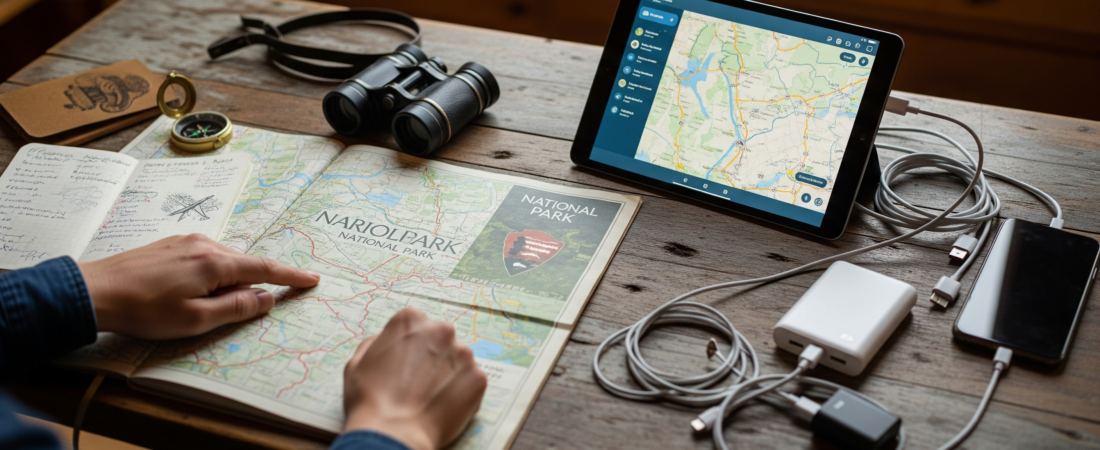
We pack our bags to escape the glowing rectangles, yet our faces remain illuminated by smartphones the moment we reach the airport. On May 2, 2026, when a prominent network of travel creators updated their extensive database of resources, the paradox became glaringly obvious. Parents crave unplugged wilderness for their children, yet they rely on infinite digital scrolling to find it.
This implicit tension lies at the heart of modern vacation planning. We want our kids to look out the window, but we are too busy looking down at a browser tab to notice the scenery ourselves. The very format of modern family travel guides – web links, interactive maps, and digital itineraries – inherently forces parents to use screens. This creates a subtle but persistent conflict between the aspirational screen-free experience and the digital tools required to achieve it.
The Digital Anchor in Analog Spaces
You book a backcountry hiking trip to Assiniboine Lodge to disconnect. You want the children to experience the raw beauty of the Canadian Rockies without the distraction of notifications. And here is exactly the problem: the logistics of getting there live entirely on your device.
From QR codes for shuttle buses to digital trail maps, the modern parent is tethered to a cellular signal. When a child sees their parent constantly checking a device, the intended message of disconnecting is lost. The parent is physically present but digitally absent.
This reliance on digital planning tools disrupts the natural pacing of a trip. Instead of observing the environment, families find themselves optimizing it. We stop looking for trail markers and start looking for GPS pings. We seek out family travel guides to find authentic moments, but the medium traps us in a cycle of constant verification.
Analog Execution of Digital Preparation
The answer is not to abandon digital resources. That would be impractical and limit your options severely. The solution is separating the preparation phase from the execution phase.
Parents must transition from digital bookmarking to physical printables before leaving the house. Do the heavy lifting at the kitchen table. Extract the vital information from those online portals and transfer it to a physical medium.
By printing activity sheets, physical maps, and daily itineraries, you remove the device from the immediate equation. The phone returns to its rightful place as an emergency tool, rather than serving as the central hub of the family’s daily entertainment and navigation. This simple shift restores the natural rhythm of travel.
The Overwhelm of Options
To understand how quickly digital planning spirals into screen addiction, look at the sheer volume of data presented to parents in modern compendiums.
A parent looking to explore British Columbia is immediately hit with 6 Easy Hikes Near Vancouver. Before they can even select a trail, the sidebar suggests 15 Vancouver Christmas Events. If they decide to head to Vancouver Island instead, they must sift through 12 Things to do in Ucluelet, B.C..
If they want to expand their island itinerary, they are presented with the 10 Best Things to do in Tofino. That is 43 distinct data points requiring digital sorting, filtering, and cross-referencing before a single boot hits the mud. When parents attempt to navigate this volume of information on the fly during a trip, they inevitably spend hours staring at their phones. The screen becomes a barrier between the family and the destination.
Where Digital Planning Fails the Family
How does this tension play out in the field? Consider these three common scenarios where digital reliance actively harms the family experience.
The Winter Resort Trap
You are planning a trip to Whistler Ski Resort. You want the kids focused on the snow and their ski instructors. But you are standing in the lift line, gloves off, freezing your fingers to pull up a digital reservation for lunch. The digital convenience suddenly feels like a physical burden. The cold drains your battery, and your attention is entirely consumed by a frozen touchscreen instead of your child’s first successful run down the bunny hill.
The Wildlife Waiting Game
You book a grizzly bear safari at Tweedsmuir Park Lodge in Bella Coola. Wildlife viewing requires immense patience, something children notoriously lack. If you rely on a tablet to keep them quiet while waiting for the bears, they will miss the subtle rustle in the bushes that signals the animal’s approach. A physical activity book about local wildlife keeps their eyes on the environment, not a screen.
The Road Trip Meltdown
You embark on one of the highly recommended 5 BC Road Trips from Vancouver. The digital guide has the perfect route mapped out. Two hours into the Kootenays, you lose cellular service entirely. The digital map fails to load the next turn, and panic sets in. A printed route would have prevented the stress entirely, allowing the family to enjoy the isolation rather than fear it.
The Medium Dictates the Experience
Here is the central insight that changes how we approach vacation planning. The screen is not just a delivery mechanism for information; it alters the fundamental dynamic of the trip.
When parents use their phones as the primary travel tool, children register that the phone is the most important object in the room. You cannot tell a child to put away their tablet while you are simultaneously scrolling through restaurant reviews on your phone. The medium of your planning dictates the culture of your vacation. If you want a grounded, present family dynamic, your tools must reflect that intention.
The Advantages of the Analog Shift
Moving away from real-time digital navigation offers immediate benefits. Pacing becomes inherently child-centric. Without a screen dictating the next optimized stop, families can linger at a tide pool in Victoria simply because the kids are engaged.
Battery anxiety disappears. You no longer need to calculate whether you have enough juice to take photos and still use the GPS to get back to the hotel. The mental load of the parent drops significantly when the day’s plan is committed to paper. You stop managing logistics and start participating in the vacation.
The Other Side of the Coin: When Paper Fails
There is a genuine danger in taking the analog approach too far. When is this physical-first approach wrong?
Consider winter travel in Canada. If you are driving the Vancouver to Banff road trip in the dead of winter, relying solely on a printed map is reckless. A physical document will not alert you to a sudden avalanche closure on the highway or a severe drop in temperature.
Similarly, conditions at Red Mountain Ski Resort or Kicking Horse Mountain Resort can change by the hour. In environments where weather and terrain pose real risks, real-time digital updates are not a distraction: they are a critical safety requirement. Disconnecting completely in these scenarios is a failure of judgment. Here, digital family travel guides are essential survival tools, not just convenience features.
Drawbacks and Common Mistakes
And this is where most people stumble when trying to curate family travel guides into physical formats. They simply hit “print” on a 40-page blog post.
Carrying a stack of printer paper filled with sidebar ads and irrelevant comments is not an upgrade. It is just a heavier version of the digital clutter. The goal is curation, not mere duplication.
Another common mistake is failing to create redundancies. If you lose the single physical copy of your itinerary in a coffee shop, and you have no digital backup, you are flying blind. Always keep a digital copy downloaded offline as a safety net. The physical paper should be your primary interface, but the digital file must remain your backup.
Practical Implications for Tomorrow Morning
What does this mean for your next vacation? It requires a shift in your planning workflow.
Tomorrow morning, audit your travel bookmarks. Extract only the core data: addresses, confirmation numbers, and a brief list of primary activities. Transfer this information to a single, concise document.
Next, source physical, child-friendly materials. Print out scavenger hunts specific to the Okanagan wineries you plan to visit. Buy a physical map of Golden, BC, and let the children trace the route with a marker. Shift the navigational power from your device to their hands. Let them hold the itinerary.
Key Takeaways
-
The format of digital travel resources inherently conflicts with the goal of a screen-free family vacation.
-
Attempting to navigate high-volume digital lists during a trip leads to parental screen addiction and missed moments.
-
The solution is separating digital preparation at home from analog execution on the road.
-
Safety-critical information, especially in volatile winter environments, still requires real-time digital connectivity.
-
Effective analog travel requires strict curation, not just printing out entire websites.
Next Steps for Your Family
Before your next departure, spend an hour translating your digital bookmarks into physical resources. Equip your children with printed activity sheets and physical maps, and watch how quickly their focus shifts from the screen back to the horizon. The best memories happen when everyone is looking up.
🎥 סרטונים קשורים
Things to do in Dublin with Kids – the ULTIMATE Dublin family travel guide – Dublin, Ireland 2024
🎥 סרטונים קשורים
Things to do in Dublin with Kids – the ULTIMATE Dublin family travel guide – Dublin, Ireland 2024
שאלות ותשובות
Digital family travel guides inherently create conflict because their format, relying on web links, interactive maps, and digital itineraries, forces parents to use screens. This directly contradicts the desire for a screen-free, unplugged vacation experience, leading to a subtle but persistent tension between aspiration and reality. The very tools meant to facilitate a disconnected trip actually tether families to their devices.
The key is to separate the preparation phase from the execution phase. Transition from digital bookmarking to physical printables before leaving home. This involves extracting vital information from online resources and transferring it to printed maps, activity sheets, and daily itineraries. This simple shift removes the device from immediate use during the trip, allowing phones to serve as emergency tools rather than constant distractions.
Relying solely on digital navigation during a road trip carries the significant risk of losing connectivity. If cellular service drops, digital maps may fail to load crucial turns, leading to panic and stress. This can turn an enjoyable journey into a frustrating ordeal, especially in remote areas. A printed route would prevent such disruptions, allowing families to embrace isolation rather than fear it.
It is dangerous to disconnect completely from digital travel resources in situations where real-time updates are critical for safety. This includes winter travel in areas prone to avalanches or severe weather, or at ski resorts where conditions can change rapidly. In these environments, digital alerts about highway closures, temperature drops, or changing terrain are not distractions but essential survival tools.
The overwhelming volume of data presented in modern online travel guides can quickly lead to screen addiction and decision paralysis. Parents are often bombarded with numerous suggestions for hikes, events, and attractions, requiring extensive digital sorting and cross-referencing. Attempting to navigate this information on the fly during a trip results in hours spent staring at phones, creating a barrier between the family and their destination.
A common mistake is simply printing entire blog posts without curation. This results in carrying heavy stacks of paper filled with irrelevant ads and comments, which is not an upgrade but a heavier version of digital clutter. The goal should be to extract and condense vital information into a concise, usable format, rather than duplicating the entire online source.
When parents constantly use their phones for travel planning or entertainment, children perceive the device as the most important object. This undermines any attempt to encourage children to disconnect. The medium of a parent’s planning dictates the vacation’s culture; if you want a grounded, present family dynamic, your tools must reflect that intention. Children learn by example, and a parent engrossed in a screen sends a clear message.
Shifting to an analog approach for vacation execution offers immediate benefits, including a more child-centric pacing. Without a screen dictating the next optimized stop, families can linger at points of interest that genuinely engage children. Battery anxiety disappears, and the mental load on parents significantly drops as daily plans are committed to paper, allowing them to participate more fully in the vacation rather than constantly managing logistics.